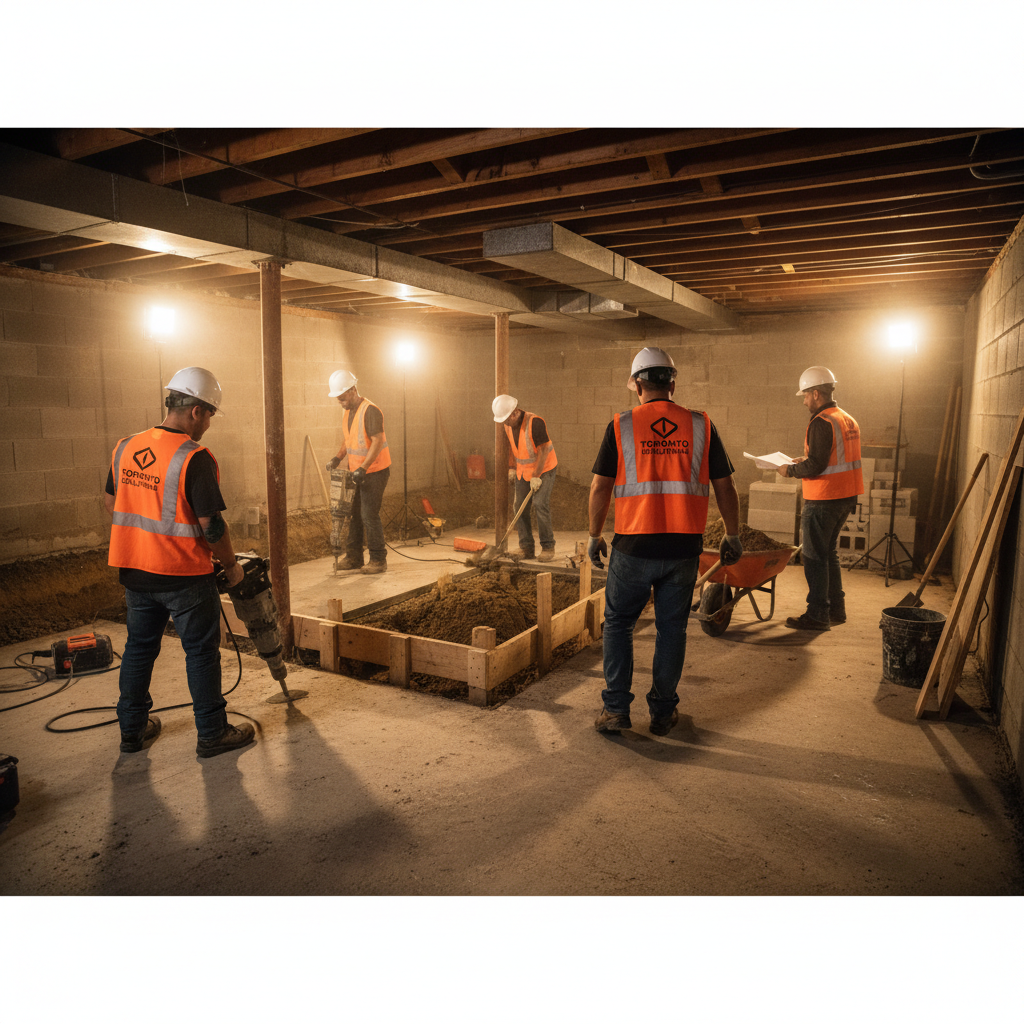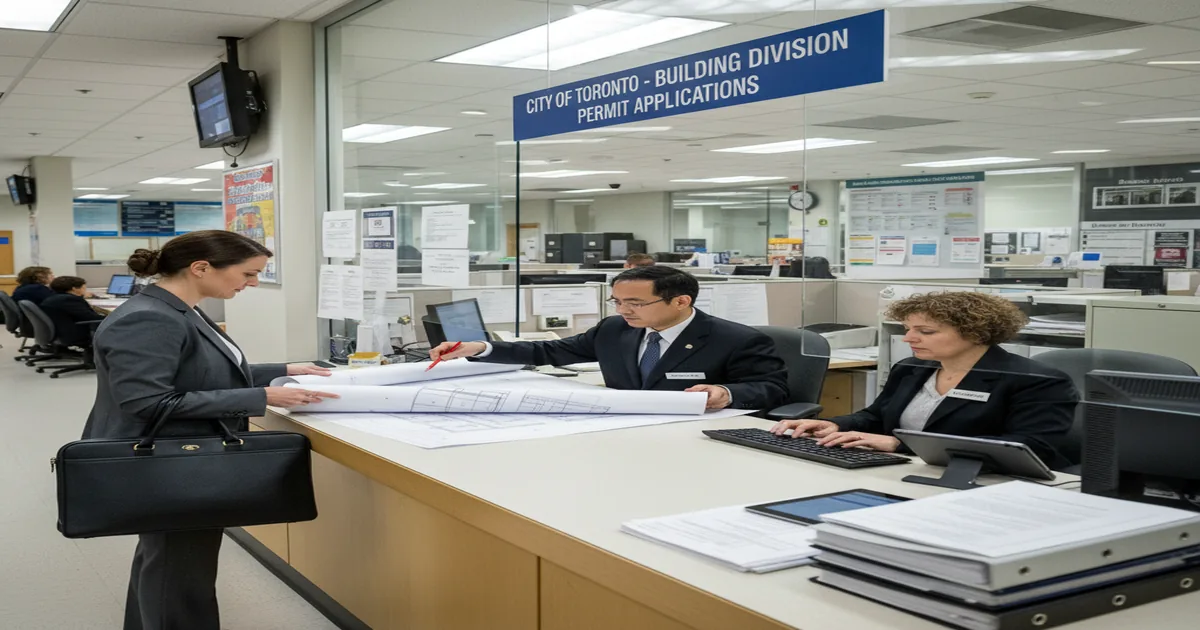
A Toronto building permit for basement underpinning takes 12 to 22 weeks from first engineer assessment to permit issuance and costs $2,000 to $4,500 in City fees, plus $1,500 to $3,000 for the engineer’s assessment and $3,000 to $8,000 for sealed structural drawings. No excavation or concrete work can begin until the permit is issued. This guide covers all six phases with realistic timelines and what causes delays at each stage.
Overview: The 6 Phases of the Underpinning Permit Process
| Phase | Description | Typical Duration |
|---|---|---|
| Phase 1 | Engineer assessment and pre-application | 2 to 4 weeks |
| Phase 2 | Engineering drawings and permit package preparation | 2 to 6 weeks |
| Phase 3 | City of Toronto plan review | 6 to 12 weeks |
| Phase 4 | Deficiency resolution and permit issuance | 1 to 3 weeks |
| Phase 5 | Construction inspections | Concurrent with construction |
| Phase 6 | Permit close-out | 1 to 3 weeks after construction |
The total time from Phase 1 through permit issuance is typically 12 to 22 weeks. Most experienced Toronto underpinning contractors factor this timeline into project planning and begin the permit process immediately after the homeowner commits.
Phase 1: Engineer Assessment and Pre-Application (2 to 4 Weeks)
Phase 1 takes 2 to 4 weeks and produces the engineer’s assessment report that forms the basis for all permit drawings. No application can be submitted without it, and no reputable contractor will quote without one. The engineer must assess the existing foundation conditions, the soil type, the footing dimensions, and any adjacent structures (neighbouring homes, garages, public utilities).
The assessment involves:
- Site visit to measure existing foundation dimensions
- Review of any available building records (City of Toronto Building Records can provide original drawings for many pre-1980 homes via a records request)
- Soil assessment (for complex projects, a geotechnical investigation may be required, adding cost and time)
- Review of neighbouring property conditions, particularly for semi-detached homes or homes with close property lines
The engineer’s assessment fee typically runs $1,500 to $3,000 for a standard Toronto detached or semi-detached home. This is a separate cost from the permit drawings.
Pre-application consultation with the City of Toronto (available through the Building Division’s pre-application process) is optional but useful for unusual sites, heritage properties, or projects near ravines or tree protection zones.
Phase 2: Engineering Drawings and Permit Package (2 to 6 Weeks)
Phase 2 takes 2 to 6 weeks and produces the sealed structural drawing set required for submission: a complete package includes the pin-section sequence plan, soil bearing analysis, shoring details, new slab design, and waterproofing specifications. The permit package for a Toronto underpinning project typically includes:
- Structural drawings showing existing and proposed footing configurations
- Pin-section sequence plan showing the order in which sections will be excavated and poured
- Soil bearing capacity analysis
- Shoring and temporary support details if required
- New slab design and reinforcement specifications
- Waterproofing system details if included in scope
For projects that also include a secondary suite or finished basement, architectural drawings showing the proposed finished layout, egress windows, ceiling heights, and fire separations are also required as part of the same application.
The permit drawings must be sealed by the structural engineer of record (P.Eng., licensed in Ontario). Drawings that are not sealed will be rejected at submission.
Phase 3: City of Toronto Plan Review (6 to 12 Weeks)
The permit application is submitted through the City of Toronto’s eSPACE portal (the current online building permit system). The submission includes:
- Completed application form with declared construction value
- Complete drawing set (PDF format, to the City’s file size and resolution specifications)
- Owner authorization and contractor information
- Schedule 1 (designer information) signed by the engineer
After submission, the City assigns a plan examiner who reviews the package for OBC compliance. For underpinning projects, this review involves a structural plan examiner, and sometimes an architectural examiner if the project includes finishing work.
Toronto Building’s current review times for complex structural permits range from 6 to 12 weeks for a complete application. An incomplete application will generate a deficiency letter and pause the clock until resubmission.
Common deficiencies that delay permits:
- Missing engineer seal on drawings
- Insufficient detail on pin-section sequence
- Egress window dimensions not meeting OBC Section 9.9.10.1
- Fire separation assembly not specified for secondary suite
- Declared construction value below the realistic cost of work (the City has authority to challenge declared values)
Phase 4: Deficiency Resolution and Permit Issuance (1 to 3 Weeks)
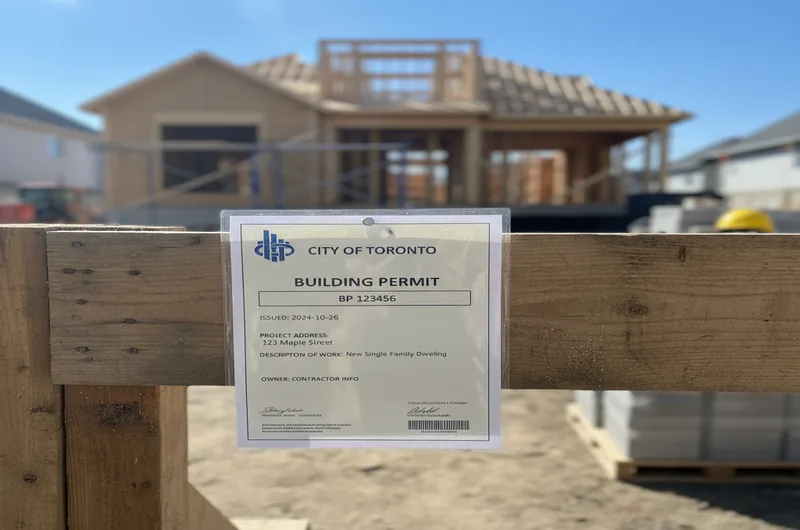
Phase 4 takes 1 to 3 weeks once all deficiencies are resolved. Permit fees at this stage run $2,000 to $4,500 for most residential underpinning projects, calculated on declared construction value, and are paid before the permit is issued. The permit is issued electronically through eSPACE and must be posted at the site during construction.
Permit fees are calculated at permit issuance. The fee formula is based on declared construction value and project type. For a residential underpinning project with a declared value of $80,000, expect permit fees of $2,000 to $3,500. For a combined underpinning and secondary suite project declared at $120,000, fees typically run $3,000 to $4,500.
The permit specifies which inspections are required and at which stages. Read the permit conditions carefully before construction begins.
Phase 5: Construction Inspections (Concurrent with Construction)
Underpinning permits in Toronto require inspections at specific construction milestones. You cannot proceed past an inspection hold point until the inspection is passed.
Required Inspections for Underpinning
Footing inspection before pour: After the pin section is excavated and formed, but before concrete is poured. The inspector confirms the footing dimensions, reinforcement placement, and soil bearing conditions match the engineered drawings.
Framing inspection (if applicable): If the permit includes finishing work, a framing inspection is required after rough framing is complete.
Rough plumbing inspection: Required before any below-slab plumbing is concealed.
Insulation inspection: In some cases required before drywall.
Final inspection: After all construction is complete, including any finishing work included in the permit.
Inspections are scheduled through eSPACE. The City requires 24 to 48 hours advance notice for inspection scheduling. Inspectors work Monday through Friday during business hours.
For underpinning projects, each pin section requires a separate footing inspection before the concrete is poured. On a project with 8 pin sections, that means 8 separate inspection bookings. Coordinate this in your project schedule.
Phase 6: Permit Close-Out (1 to 3 Weeks After Construction)
After the final inspection is passed, the permit is closed out in the City’s system. The permit close-out letter is important documentation for:
- Secondary suite registration with the City
- Future sale of the home (a closed permit is evidence the work was done legally and inspected)
- Insurance purposes
Retain all permit documentation, including the original permit, all inspection records, and the close-out letter. Store copies off-site or in the cloud.
What If You Start Without a Permit?
The consequences of proceeding without a building permit for underpinning are serious.
Stop-work order. The City can issue a stop-work order at any time. You must halt all work until the permit is obtained.
Retroactive permit. The City may require an “as-built” permit, which involves exposing work that has already been completed for inspection. If a poured footing cannot be inspected, the City may require you to expose the footing, which means demolishing concrete.
Fines. The City of Toronto can fine homeowners up to $50,000 for major permit violations.
Sale complications. A real estate lawyer conducting a title search before sale will identify the unpermitted work. Buyers and their agents will request documentation. Many transactions fall apart over unpermitted structural work.
Insurance gaps. Some home insurers will deny claims related to a structural failure if the affected work was done without a permit.
Who Handles the Permit: Contractor or Homeowner?
Most experienced underpinning contractors will pull the permit as the general contractor. This is the recommended approach because the contractor knows the scope, can accurately declare the construction value, and is listed as the responsible contractor on the permit.
If a contractor asks you to pull the permit yourself or suggests the work can be done without one, treat this as a significant warning sign.
For further context, read our guides on Is Basement Underpinning Safe? and What to Expect During Basement Underpinning.